Newfoundland and Labrador: A Few Things Worth Knowing
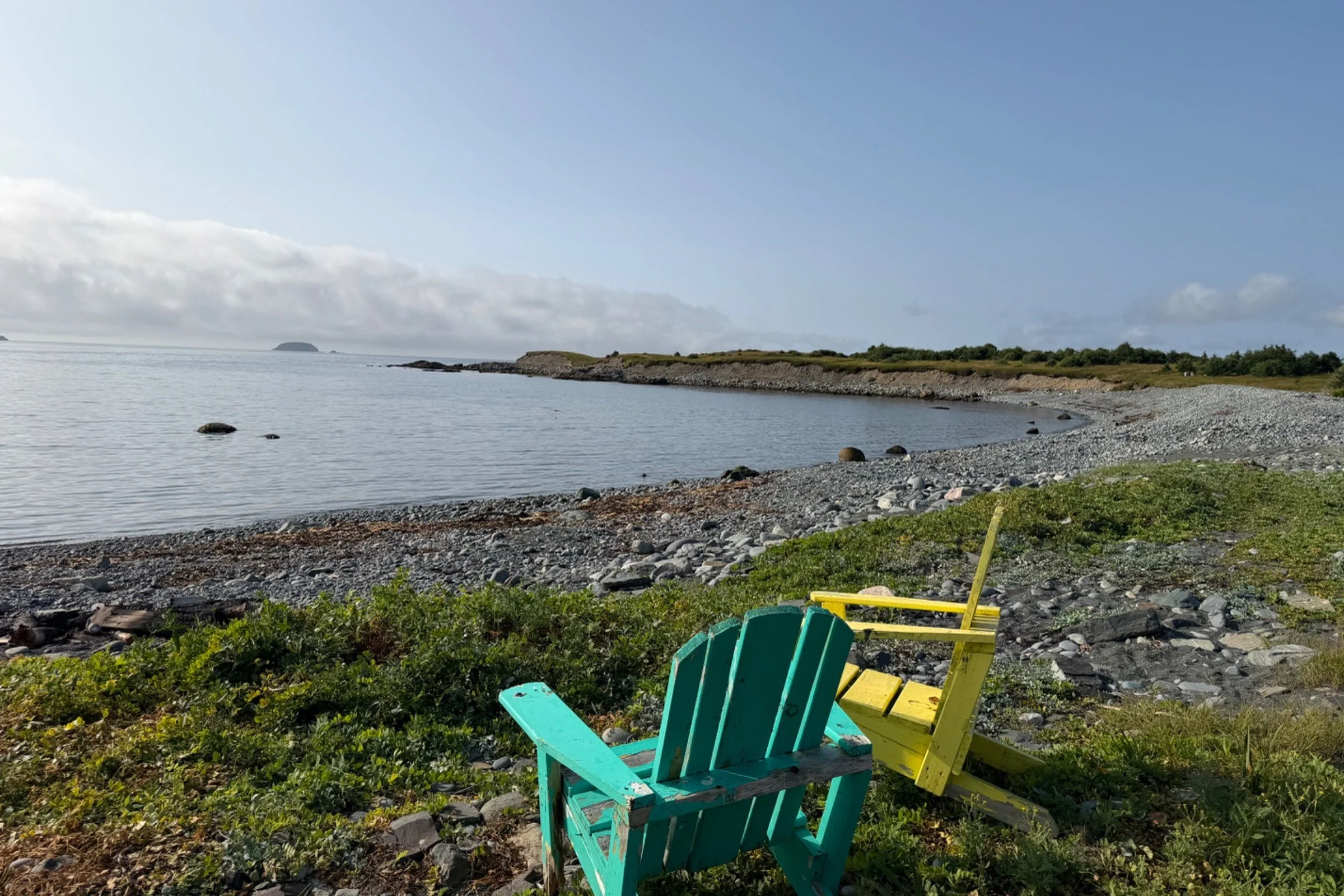
A quiet stretch of coastline in Witless Bay, NL. (Photo by Sarah Fleming)
I regularly work with clients, agencies, associations and companies from outside the province that need help navigating the Newfoundland and Labrador landscape. Over time, I've noticed some of the same questions and the same small but important missteps coming up again and again.
So, I thought I'd share a few of the basics.
This isn't meant to be a guide to working or engaging in Newfoundland and Labrador. Doing that well requires a much deeper understanding of the province, its people, politics, history, regions, industries, relationships and plenty more.
Think of this instead as a cheat sheet for some of the easy-to-miss details. None are dealbreakers, and I wouldn't expect someone from outside the province to know all of them. But they're useful to know, and getting them right shows you've done some homework.
A few things to know:
It's Newfoundland and Labrador. Not just Newfoundland. Labrador isn't an afterthought. It's an integral part of the province, with its own communities, cultures and priorities.
Be careful with "the island." Newfoundland is an island. Newfoundland and Labrador isn't. If you're talking about the province, say the province.
Provincial politicians are MHAs, or Members of the House of Assembly. Not MLAs. Not MPPs. The legislature is the House of Assembly, so the title follows.
Provincial political parties don't always mirror their federal counterparts. In Newfoundland and Labrador, it's the Progressive Conservative (PC) Party, not the Conservative Party. Around here you'll usually hear people talk about "the PCs."
Most people who live here don't call it "The Rock." You'll hear it from tourists, mainlanders and people trying to sound like insiders.
The term "Newfie" is complicated. While some people use it about themselves, many find it offensive because of its history as a stereotype or slur. It's safest to avoid it.
And a Canadian geography distinction worth knowing: Newfoundland and Labrador is not part of the Maritimes. The Maritimes are Nova Scotia, New Brunswick and Prince Edward Island. Atlantic Canada includes those three provinces plus Newfoundland and Labrador. Referring to Newfoundland and Labrador as part of "the Maritimes" can get under people's skin. It's a small distinction, but getting it wrong will be noticed.
A little history helps too. The province joined Canada in 1949 after two referendums, and the final vote was very close. Confederation was deeply divisive at the time and remained a sensitive subject for years. Most of that is water under the bridge now. People in Newfoundland and Labrador are proud Canadians, particularly in today's geopolitical climate, but there's also a very strong sense of provincial identity. For many people, being a Newfoundlander or Labradorian is an important part of who they are, and often the identity they reach for first. There's another layer to that as well: provincial identity is often closely tied to whether someone calls Newfoundland or Labrador home.
Geography shapes perspective. St. John's is closer to Dublin than Vancouver. The province's history, economy and outlook have been shaped by the ocean, international trade and transatlantic connections for centuries.
Don't forget the time zone. Newfoundland Time is 30 minutes ahead of Atlantic Time and 90 minutes ahead of Eastern Time. Most of Labrador follows Atlantic Time, while communities along the southeast coast of Labrador observe Newfoundland Time. It can be confusing, but getting it right says a lot. And here's one more wrinkle: if you're travelling by ferry from the Northern Peninsula of Newfoundland to the south coast of Labrador, the ferry actually lands in Blanc-Sablon, Quebec, just across the Labrador border. Blanc-Sablon is on Atlantic Standard Time year-round but doesn't observe daylight saving time.
Some of the next few points could probably be said about a lot of places. Relationships matter everywhere. Rural communities aren't all the same. Demographics change. History shapes how people see things. But if you're going to work or engage here, it's worth understanding how those things play out in Newfoundland and Labrador.
There isn't one Newfoundland and Labrador perspective. St. John's, Stephenville, Happy Valley-Goose Bay, Natuashish, Trepassey, St. Lawrence, Port aux Basques, Fogo Island, Gander, St. Anthony and countless other communities all see issues through different lenses. Don't assume one conversation tells you what the whole province thinks.
Don't treat "rural" as one thing. An outport on the South Coast of Newfoundland, a community on the Northern Peninsula, a mining town in Labrador West and an Inuit community in Nunatsiavut aren't variations on the same rural experience. Geography, transportation, industry, culture and access to services can be very different. Sometimes understanding the province means understanding what connects communities. Just as often, it means understanding what separates them.
Know who you're engaging. Indigenous governments and organizations have different histories, mandates, rights and relationships with the Crown. Before you build an engagement plan, make sure you understand who should be at the table and why. A generic approach to Indigenous engagement developed somewhere else in Canada isn't enough. Neither is planning and executing engagement without direct input from the groups and communities involved.
Don't rely on an old picture of Newfoundland and Labrador. The province is becoming more culturally diverse, with newcomers playing an increasingly important role in communities, workplaces and the economy. That change isn't happening in exactly the same way or at the same pace everywhere. If you're trying to understand an audience or engage a community, pay attention to who actually lives there today rather than the Newfoundland and Labrador you remember, or imagine, from 20 years ago.
Relationships matter. Newfoundland and Labrador has a small population and remarkably interconnected political, business and community networks. People change jobs and sectors, but the relationships often follow them. Reputations travel. Showing up consistently, understanding the history around an issue and taking the time to build trust will take you further than parachuting in with assumptions.
Finally, history has a long memory here. Confederation, resettlement, the cod moratorium, Churchill Falls, offshore oil resources and the province's relationship with Ottawa aren't just chapters in a history book. Depending on the issue and where you are in the province, they can still shape how people think about government, resource development, fairness and who benefits. You don't need to become a historian before taking a meeting, but knowing the history behind the issue you're working on can save you from badly misreading the room.
Of course, knowing what to call an MHA or remembering the half-hour time difference doesn't mean you understand Newfoundland and Labrador. That's a much bigger undertaking.
But the little things matter. They show you've done your homework, and they're a pretty good place to start.